
Business Case Study
Ota Ikegami Hospital(Yokohama Future Healthcare Systems Medical Corporation)
Reduced costs and improved efficiency by promoting usage of
digital multifunction printers
Easing the burden of printing tasks to improve healthcare services
Hospital
Reduced costs, Improved efficiency, Improved service
BP-70C65×1 BP-70C45×1
MX-6151×1 MX-4151×1
MX-3661×1
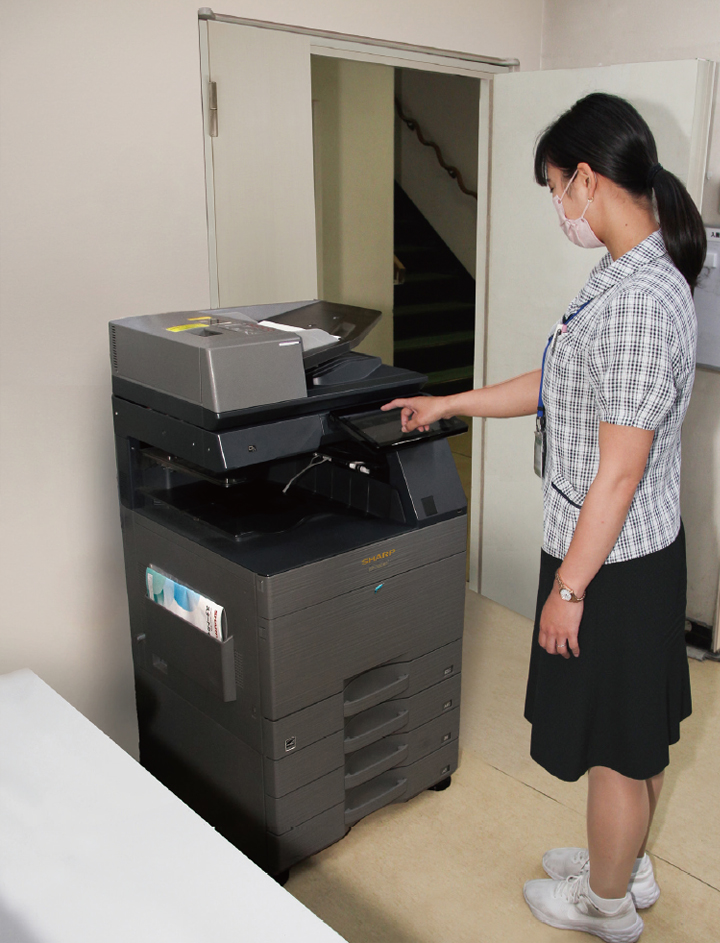
Implemented five units total (including replacements) in November 2022 and October 2023. In addition to the General Affairs Section, the Medical Affairs Section, the Cooperation Section, and the hospital ward, there was an installation at the Ota Ikegami Home Care Station.
Ota City, Tokyo
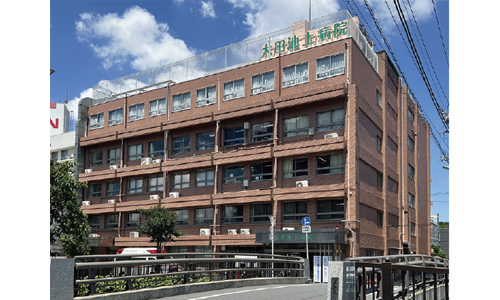
Established in 1951. A member of the Toda Medicalcare Group (TMG). The hospital has 144 general beds and 15 medical departments. From the perspective of being an
integrated community care system, strives to offer medical care and caregiving in line with the community’s needs.
Our hospital was using many home printers for various purposes such as the printing of financial records. However, we often had to buy replacements due to breakdowns, leading to increasing printing costs. In addition, since home printers are also inefficient when printing and copying in large quantities, there was a demand for the implementation and expansion of digital multifunction printers.
- The fast, clear printing earned positive on-site evaluations. As the burden of printing tasks was eased, there was an improvement in healthcare services.
- Connection to the existing Wi-Fi network was simple with the standard wireless LAN feature. There was no need for wired installation, reducing implementation costs.
- Optional IC card authentication is used to restrict color printing. This leads to reduced printing costs.
There is a large range of information that is printed on paper for storage and use, such as various financial records, logs, meeting minutes, and so forth. We had implemented home printers in each department, and were using those. Since we had a large number of printers and these units were difficult to manage due to differing manufacturers, ink replacement costs and unit replacement costs due to breakdowns had risen. Further, home printers are not ideal for printing and copying in large quantities. For that reason, in consideration of improved efficiency of printing tasks in the hospital ward, we wanted to change to digital multifunction printers.

Ota Ikegami Hospital (Yokohama Future Healthcare Systems Medical Corporation)
(Left)Yuichi Ishikawa
Supervisor
General Affairs Section
(Right)Mikako Takakura
General Affairs Section
There is peace of mind after installation with the thorough support system.
Since there are many highly confidential documents, we appreciated not only the printing speed and clarity, but also aspects such as security and ease of performing user management/printing restrictions. The newest models have a standard wireless LAN feature, allowing them to be simply connected to the existing Wi-Fi network and offering the benefit of not having to perform new wired installations. Moreover, Sharp offers a thorough support system including in-person maintenance services and a point of contact for phone support*. This gave us peace of mind in terms of operations after implementation.
Note: The maintenance services provided vary depending on the country or region.
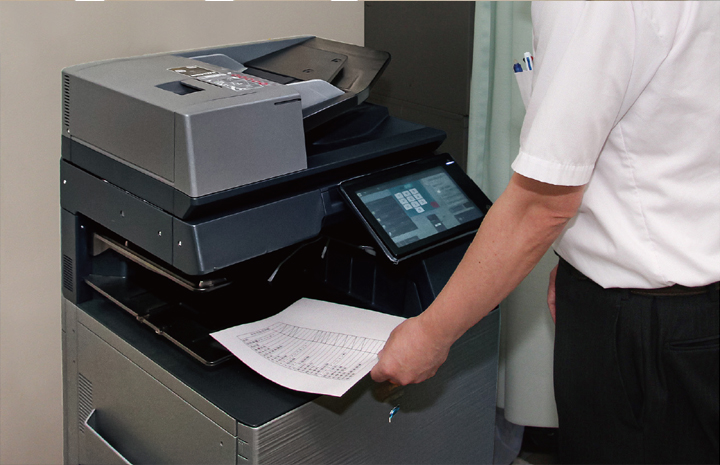
A new installation in the hospital ward led to easing the burden of printing tasks.
Color printing requiring IC card authentication reduces costs.
We received praise from on-site nursing staff members stating that in the hospital ward, where there was a new implementation on this occasion, the burden of printing tasks was eased, making it possible to focus more on caring for patients. In addition, the implementation has also made it possible to print examination results and the like with speed and clarity, leading to a reduction in waiting time for patients. In terms of reduced costs, restrictions on color printing through the usage of IC card authentication have been effective. Instances of, for example, accidentally printing large quantities in color have been eliminated by introducing a restriction in which color printing is not possible without borrowing an IC card from the General Affairs Section.
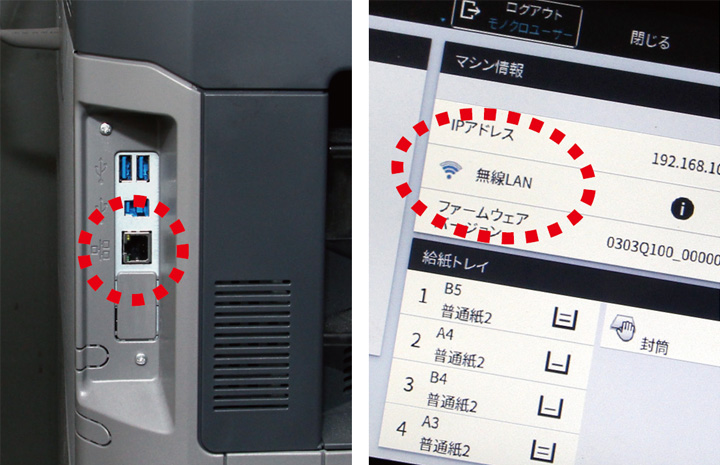
Even without connecting a LAN cable, printing can be performed via wireless LAN.
Focus also on turning paper documents into PDFs for data sharing.
Moving forward, we will further consolidate our printers into multifunction printers to promote reduced costs and improved efficiency. Furthermore, for some documents which do not need to be stored in paper format, we are using the scanner function of our multifunction printers and performing data sharing in PDF format. We will continue to leverage the various convenient functions of digital multifunction printers to strive toward business improvements.
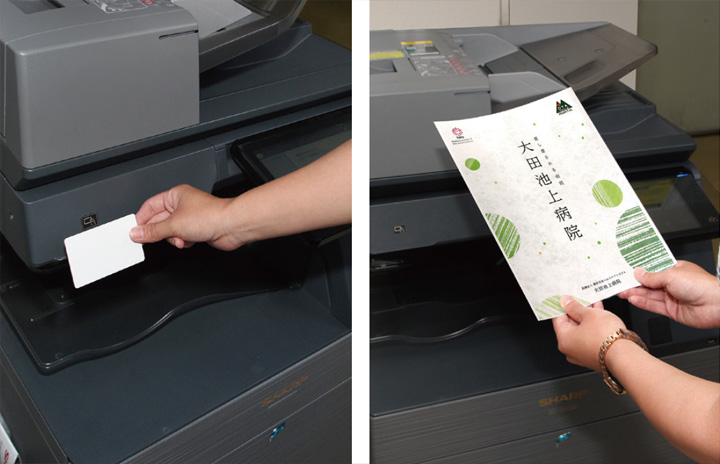
Using IC card authentication to restrict color printing and reduce printing costs.
Issued July 2024
 Products
 Products
 Support