Promoting Supply Chain CSR
Determining Procurement from the Standpoint of Providing Equal Opportunity and Fair Evaluation
Sharp’s business philosophy states, “Our future prosperity is directly linked to the prosperity of our customers, dealers and shareholders.” In line with this, we work with suppliers and all other stakeholders to provide solutions to social issues through business and to mitigate impacts on society and the environment as we pursue sustainable growth and mutual prosperity.
To these ends, we emphasize impartiality and fairness in all purchasing activities and choose who we will procure parts, materials, and equipment from by providing Japanese and overseas suppliers with an equal opportunity to do business with us. This opportunity includes a fair evaluation of whether a supplier meets our requirements in such areas as quality, standards, and performance.
Basic Purchasing Principles
To ensure sustainable growth and mutual prosperity with our suppliers, we are going beyond initiatives related to the quality, price, and delivery of parts and materials. We are also seeking to fulfill our social responsibilities over a wide range of areas across the entire supply chain. These areas include product safety, environmental protection, human rights and labor, and health and safety.
Sharp’s basic concept, concrete policies, and requests to suppliers pertaining to procurement activities are set out in the Basic Purchasing Principles. In the Basic Purchasing Principles Requests to Suppliers, we make clear that we expect suppliers to actively work to ensure that, in addition to complying with all relevant laws, they also protect the environment and are in compliance with social norms, such as those regarding the arrangement of a proper labor environment, the prohibition of child and forced labor, the prohibition of discrimination, and the prohibition of bribery and unfair acts.
To deepen the understanding between Sharp and business partners about sustainable procurement, we communicate actively with supplier sales representatives on a daily basis.
Basic Procurement Concept
- Sharp's procurement activities are conducted in an open and impartial manner, with a fair evaluation given to suppliers in and outside Japan.
- Sharp will comply with all laws and regulations, and achieve mutual prosperity with suppliers.
- Sharp will fulfill social responsibility such as the conservation of the environment through its procurement activities.
- Sharp pursues optimal quality and cost to the fullest.

Overview of the Global Supply Chain
We have 19 consolidated subsidiaries in Japan and 97 overseas (as of March 31, 2026). In line with the globalization of our business, 54.8% of sales are from overseas business; similarly, 73.2% of materials procurement, in terms of monetary amount, is by overseas production bases.
We have established an international procurement office (IPO) in Hong Kong and South Korea to further procurement activities such as increased procurement of materials locally and more streamlined distribution.
Through increased procurement of local parts and materials, we contribute to mutual prosperity with suppliers and advancement of regional economies.
Sales by Region (Fiscal 2025)

Procurement Amount Composition Ratio by Production Base (Fiscal 2025)

Promoting CSR across the Entire Supply Chain
| Fiscal 2025 Objectives | Fiscal 2025 Achievements | Self-Evaluation | Priority Objectives for Fiscal 2026 |
|---|---|---|---|
|
|
★★★ |
|
- Self-evaluation:
- ★★★ Achieved more than targeted /
- ★★ Achieved as targeted /
- ★ Achieved to some extent
Supply Chain CSR Policies and Systems
The Sharp Group’s fundamental policies with regard to CSR are established in the Sharp Group Charter of Corporate Behavior and the Sharp Code of Conduct. Every effort is made to ensure that all Sharp employees are aware of and adhere to these policies.
The Corporate Procurement Group, which promotes supply chain CSR, has been organizationally strengthened as a business unit directly under the president & CEO from June 2024. It coordinates with each business unit and subsidiary’s procurement department to pursue Group-wide implementation of sustainable procurement activities.
At meetings of the Sustainability Committee, which is chaired by the CEO, members from relevant head office departments, along with business units and subsidiaries, share their policies and measures. The committee also monitors and manages progress on supply chain CSR-related measures.
Sharp Supply-Chain CSR Deployment Guidebook
To help suppliers understand and put into action CSR philosophy as stated in Sharp’s Basic Purchasing Principles, in fiscal 2007 we formulated and distributed the Sharp Supply-Chain CSR Deployment Guidebook in Japanese, English, and Chinese. The Basic Products Purchase Agreement also includes articles on CSR initiatives, based on the guidebook, that suppliers are requested to follow. In addition, we ask our business partners’ suppliers to also support and implement the guidelines in this guidebook.
In fiscal 2015, we fully revised the content of our guidebook to conform to the RBA Code of Conduct. Since then, we have revised the guidebook as needed in line with revisions to the RBA Code of Conduct. In this way, we strive to comply with the increasingly sophisticated international standards for CSR.
Participation in Industry Standard Initiatives
In December 2021, we joined the RBA (Responsible Business Alliance), an alliance of companies that pursue social responsibility across the global supply chain. The RBA’s vision and mission are shared throughout the entire Sharp Group in order to promote sustainable procurement.
We also actively participate in the activities of groups such as the Japan Electronics and Information Technology Industries Association (JEITA), through which we contribute to the promotion of industry-wide sustainable procurement.
Content of Sharp Supply-Chain CSR Deployment Guidebook, 4th Edition (revised January 2025)
A. Labor
- Prohibition of Forced Labor
- Young Workers
- Working Hours
- Wages and Benefits
- Non-Discrimination/Non-Harassment/Humane Treatment
- Freedom of Association and Collective Bargaining
B. Health and Safety
- Occupational Health and Safety
- Emergency Preparedness
- Occupational Injury and Illness
- Industrial Hygiene
- Physically Demanding Work
- Machine Safeguarding
- Sanitation, Food, and Housing
- Health and Safety Communication
C. Environment
- Environmental Permits and Reporting
- Pollution Prevention and Resource Conservation
- Hazardous Substances
- Solid Waste
- Air Emissions
- Materials Restrictions
- Water Management
- Energy Consumption and Greenhouse Gas Emissions
D. Ethics
- Business Integrity
- No Improper Advantage
- Disclosure of Information
- Intellectual Property
- Fair Business, Advertising, and Competition
- Protection of Identity and Non-Retaliation
- Responsible Sourcing of Minerals
- Privacy
E. Management Systems
- Company Commitment
- Management Accountability and Responsibility
- Legal and Customer Requirements
- Risk Assessment and Risk Management
- Improvement Objectives
- Training
- Communication
- Worker/Stakeholder Engagement and Access to Remedy
- Audits and Assessments
- Corrective Action Process
- Documentation and Records
- Supplier Responsibility
Promoting CSR Awareness and Conducting Risk Assessment at Suppliers
There has been increasing concern around the world in recent years about issues such as slave labor and forced labor. Europe and North America have led the way in enacting, enforcing, or discussing laws promoting due diligence of human rights in the supply chain. Examples include the Uyghur Forced Labor Prevention Act and the EU Corporate Sustainability Due Diligence Directive (CSDDD). Companies today are expected to be stricter than ever in implementing CSR in the supply chain.
We periodically carry out CSR/green procurement surveys to confirm how well suppliers are carrying out CSR based on the RBA Code of Conduct-compliant Sharp Supply-Chain CSR Deployment Guidebook and to identify, assess, and reduce CSR risk in the supply chain.
The survey form covers a wide range of areas: legal compliance and international norms, human rights and labor, safety and health, environment, fair trade and ethics, quality and safety, information security, business continuity planning (BCP), management systems, and chemical substance management and biodiversity.
To help suppliers understand things like the purpose and background of the survey, we add our own explanations to major questions. This helps make the survey a medium that prompts suppliers to further their understanding of international CSR standards.
The survey is carried out separately at each factory of suppliers, or secondary manufacturers and downward on the supply chain, that makes products for Sharp. Survey scorecards are shared with them, and those with low-scoring areas are asked to submit corrective action plans. Through such post-survey communication with suppliers, we are continuously working to improve CSR across the supply chain.
In fiscal 2025, we surveyed 915 business sites of 562 companies, which account for the top 80% of Sharp’s domestic and overseas suppliers in terms of procurement value, and received responses from 915 business sites of 562 companies (a response rate of 100%). Of these, 17 sites received low ratings and were asked to implement corrective action plans. No serious issues, such as forced labor or child labor, were identified in the supply chain.
If, through our continuing due diligence, it was determined that a human rights violation did occur, we would immediately enter into discussions with the supplier in question based on the supplier contract, and take the necessary corrective and remedial measures. If no remediation is expected, we will take strict measures, such as suspending transactions, while prioritizing relief measures for victims.
We will continue to step up our efforts in response to trends in international human rights due diligence as we fulfill our corporate social responsibility across the entire supply chain.
Assessment Distribution of CSR/Green Procurement Survey (All Production Sites in Japan and Overseas)

Fiscal 2025 CSR/Green Procurement Survey: Examples of Issues and Solutions
| Area | Supplier Issues (reasons for ‘D’ rank) | Supplier Improvements |
|---|---|---|
| Compliance with the Laws and Regulations and Respect to International Norms |
|
|
| Fair Trading and Ethics |
|
|
| BCP |
|
|
| Establishing a Management System |
|
|
| Information Security |
|
|
Education for Procurement Personnel
To help all those in procurement positions company-wide improve their understanding and implementation of CSR, a thorough explanation of the Basic Purchasing Principles, along with a curriculum relating to supply chain CSR, is included in training materials for new employees, transferred employees, and management skills improvement.
Additionally, all Sharp Group employees in Japan take compliance-related training based on the Sharp Code of Conduct in order to foster respect for human rights, and ESG-related training in order to gain basic knowledge about sustainable procurement. This is done to ensure that all procurement personnel within the company have undergone training on sustainable procurement.
In fiscal 2025, sustainability-related learning was implemented for 100% of employees engaged in procurement work across the entire Sharp Group, including overseas bases.
Moving forward, we will continue to expand and implement these educational programs in order to promote greater understanding of sustainable procurement among procurement personnel, both in Japan and overseas.
Procurement BCP
In order to enable the continuation and rapid recovery of business with our business partners in the event of large-scale disasters, such as earthquakes and typhoons, or epidemics of infectious diseases, we use the Rules of Business Risk Management to create and periodically revise business continuity plans (BCPs).
To ensure that corporate procurement departments secure a stable supply of parts and materials at fair prices, we continuously strengthen partnerships with suppliers regarding long-term supply contracts and other matters, as well as purchase from multiple suppliers. We also require suppliers to periodically check and update the factories that produce items delivered to Sharp. We also carry out CSR/green procurement surveys to confirm how well suppliers are making and maintaining BCPs.
Strengthening the Hotline and Consultation System for Suppliers
Sharp Corporation and its affiliated companies in Japan have set up the Crystal Hotline to handle organizational and individual legal and ethical violations. The hotline accepts reports and consultation requests from suppliers.
Additionally, in order to develop a grievance mechanism as required of companies by the United Nations Guiding Principles on Business and Human Rights (UNGP), we became an inaugural member (regular member) of the Japan Center for Engagement and Remedy on Business and Human Rights (JaCER) in 2020.
A broad range of stakeholders, including employees of suppliers in global supply chains (including second-tier and lower suppliers) and the labor unions and NGOs that support them, have been able to make use of JaCER’s Engagement and Remedy Platform, available in 34 languages, to submit reports of human rights-related grievances.
Encouraging Business Partners to Conduct Sustainable Procurement
In addition to the aforementioned CSR/green procurement surveys, we held the Sharp Supplier Summit in Japan in October 2025 to help suppliers deepen their understanding of sustainable procurement. At the event, we explained our sustainable procurement policy to 173 people from 98 major supplier companies.
As a member of the CSR Committee and the Responsible Minerals Trade Working Group of the Japan Electronics and Information Technology Industries Association (JEITA), we actively support the promotion of understanding and capacity building among our suppliers, such as through our involvement in educational and awareness-raising activities on sustainable procurement, including planning and running lectures for suppliers and disseminating the latest information.
Audits and Education to Ensure Full Compliance with the SME Transactions Act
In Japan, Sharp Corporation and its affiliated companies implement compliance checks and in-house education on an ongoing basis to comply with the SME Transactions Act (Act on Preventing Delay in Payment to Small and Medium-Sized Entrusted Business Operators in Relation to Manufacturing Consignment), a law aimed at protecting the interests of small and medium-sized entrusted business operators.
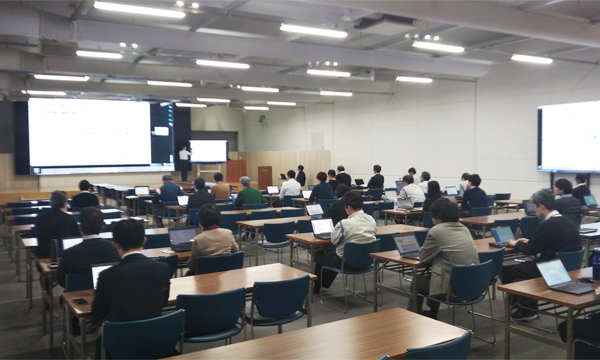
The compliance checks are self-audits conducted every year by business units, procurement departments, head office departments, and domestic affiliated companies to ensure thorough compliance with the SME Transactions Act. To further raise awareness of complying with the SME Transactions Act and ensure all employees related to procurement are knowledgeable in matters such as government policies concerning transactions with small and medium-sized entrusted business operators, we held in-house study sessions at each of our domestic affiliates, e-learning for approximately 12,000 employees group-wide (81.7% of all Sharp Group employees in Japan), and had employees take outside seminars.
Responsible Minerals Procurement
| Fiscal 2025 Objectives | Fiscal 2025 Achievements | Self-Evaluation | Priority Objectives for Fiscal 2026 |
|---|---|---|---|
|
|
★ |
|
- Self-evaluation:
- ★★★ Achieved more than targeted
- ★★ Achieved as targeted
- ★ Achieved to some extent
Policies and Systems for Responsible Minerals Procurement
In recent years, legal regulations and social demands regarding human rights and environmental due diligence have been increasing globally, such as the EU Battery Regulation and Corporate Sustainability Due Diligence Directive, in addition to the U.S. Dodd-Frank Wall Street Reform and Consumer Protection Act and the EU Conflict Minerals Regulation. In particular, in responsible minerals procurement, the range of minerals, regions, and risks covered has expanded beyond 3TG to include cobalt, natural mica, lithium, nickel, natural graphite, and more.
Based on the OECD*1 Due Diligence Guidance for Responsible Supply Chains of Minerals from Conflict-Affected and High-Risk Areas (OECD Guidance), our basic policy at Sharp is to avoid contributing to risks, such as human rights abuses, environmental destruction, funding of armed groups, and corruption in the supply chain of minerals contained in the materials and components procured by the Sharp Group, and to take appropriate measures to avoid hindering sound, legitimate business activities in those areas.
Under this basic policy, we have built a responsible minerals procurement system in our major business units and subsidiaries. We have also made responsible minerals procurement one of the key themes at the Sustainability Committee, chaired by the president & CEO, and regularly monitor the progress of relevant measures.
Minerals Procurement Due Diligence in Accordance with International Standards
We use the RMI’s*2 international reporting templates (CMRT*3 and EMRT*4) to conduct surveys on 3TG (tantalum, tin, tungsten, and gold) and, if requested by customers, cobalt and natural mica, as well as copper, nickel, lithium, natural graphite, and other minerals.
In the surveys, primary suppliers are urged to procure minerals from RMAP*5-conformant smelters or refiners. And, based on examination of the CMRT and EMRT returned by survey participants, we identify and evaluate risks based on the OECD Guidance. For the identified smelters and refiners, we check their status against the list published by RMI to confirm their RMAP conformance status.
In fiscal 2025, in response to the growing external demand for responsible minerals procurement, we expanded the scope of our survey to include product groups subject to external evaluation, in addition to our existing key products. As a result of about 570 surveys regarding component materials included in the target products, we identified 377 3TG smelters and refiners, and the overall RMAP conformance rate across our major business units and subsidiaries was approximately 61%*6.
While the RMAP conformance rate was lower than the previous year due to the expansion of the survey scope, which led to the identification of smelters and refiners that had not been fully accounted for previously, we consider this to be an important step toward improving transparency in the upstream supply chain.
Going forward, for smelters and refiners that are not yet conformant with RMAP and those with high risk levels, we urge their participation in RMAP through the supply chain. If any smelters or refiners have been found to be dealing with armed groups or complicit in serious human rights abuses, this information will be shared with suppliers, with whom we will discuss corrective action and measures such as switching to RMAP-conformant smelters or refiners.
RMAP Conformance Rates for Designated Smelters and Refiners
| Fiscal 2023 | Fiscal 2024 | Fiscal 2025 | |
|---|---|---|---|
| RMAP conformance rates | 79% | 80% | 61% |
- Organisation for Economic Co-operation and Development.
- RMI: Responsible Minerals Initiative.
- CMRT (Conflict Minerals Reporting Template) is a free, standardized reporting template developed by the RMI.
- EMRT (Extended Minerals Reporting Template) is a free, standardized reporting template developed by the RMI. It covers the cobalt, mica, copper, nickel, lithium, and natural graphite supply chains.
- RMAP (Responsible Minerals Assurance Process) is an RMI program for validating conformance of RMI-listed smelters or refiners.
- As of March 2026.
Cooperation with Industry
To ensure that responsible minerals procurement is carried out efficiently and effectively, we believe it is important not only to pursue individual company initiatives, but also to collaborate with industry associations and stakeholders both in Japan and overseas, as well as to foster a shared understanding throughout the entire supply chain.
Since fiscal 2012, we have been a member of the Responsible Minerals Trade Working Group of the Japan Electronics and Information Technology Industries Association (JEITA), where we participate in the development of common industry survey methods and supplier awareness-raising activities.
Furthermore, since December 2021, we have been a member of the RMI. We have worked to stay informed about international trends in responsible minerals procurement and to continuously enhance our minerals due diligence by utilizing international frameworks such as RMAP.
Education and Awareness Raising on Responsible Minerals Procurement
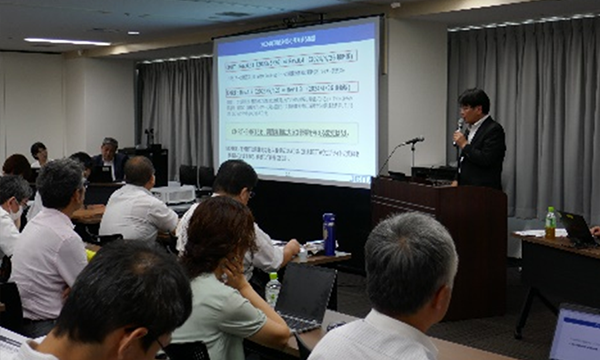
To deepen employees’ understanding of responsible minerals procurement, as a rule we hold monthly meetings with those in charge of surveys at major business units and production subsidiaries. At these meetings, we discuss the latest international trends, customer requests, practical challenges in surveys, and improvements to our survey systems.
Procurement personnel and new employees take part in periodic supply chain CSR training, which covers responsible minerals procurement. Another way we further employees’ understanding of responsible minerals procurement is by uploading new and relevant materials to the self-learning section of the Sharp intranet.
To support suppliers, we are also active participants in JEITA’s Responsible Minerals Sourcing Inquiry Briefings from the planning phase onward, and we help with creating documents and running the sessions. This helps improve suppliers’ understanding and the quality of surveys. In addition, for smelters and refiners that are not yet participating in RMAP, we conduct outreach through industry associations and the supply chain to encourage them to undergo audits, contributing to the reduction of human rights and environmental risks in the global mineral supply chain.
Due Diligence Efforts in Line with OECD Guidance
To carry out responsible minerals procurement, we integrate into our management a five-step framework for risk-based due diligence recommended in the OECD Due Diligence Guidance for Responsible Supply Chains of Minerals from Conflict-Affected and High-Risk Areas (OECD Guidance).
| OECD Five-Step Framework | What Sharp Is Doing |
|---|---|
| Step 1: Establish strong company management systems |
|
| Step 2: Identify and assess risk in the supply chain |
|
| Step 3: Design and implement a strategy to respond to identified risks |
|
| Step 4: Carry out independent third-party audit of supply chain due diligence at identified points in the supply chain |
|
| Step 5: Report on supply chain due diligence |
|